


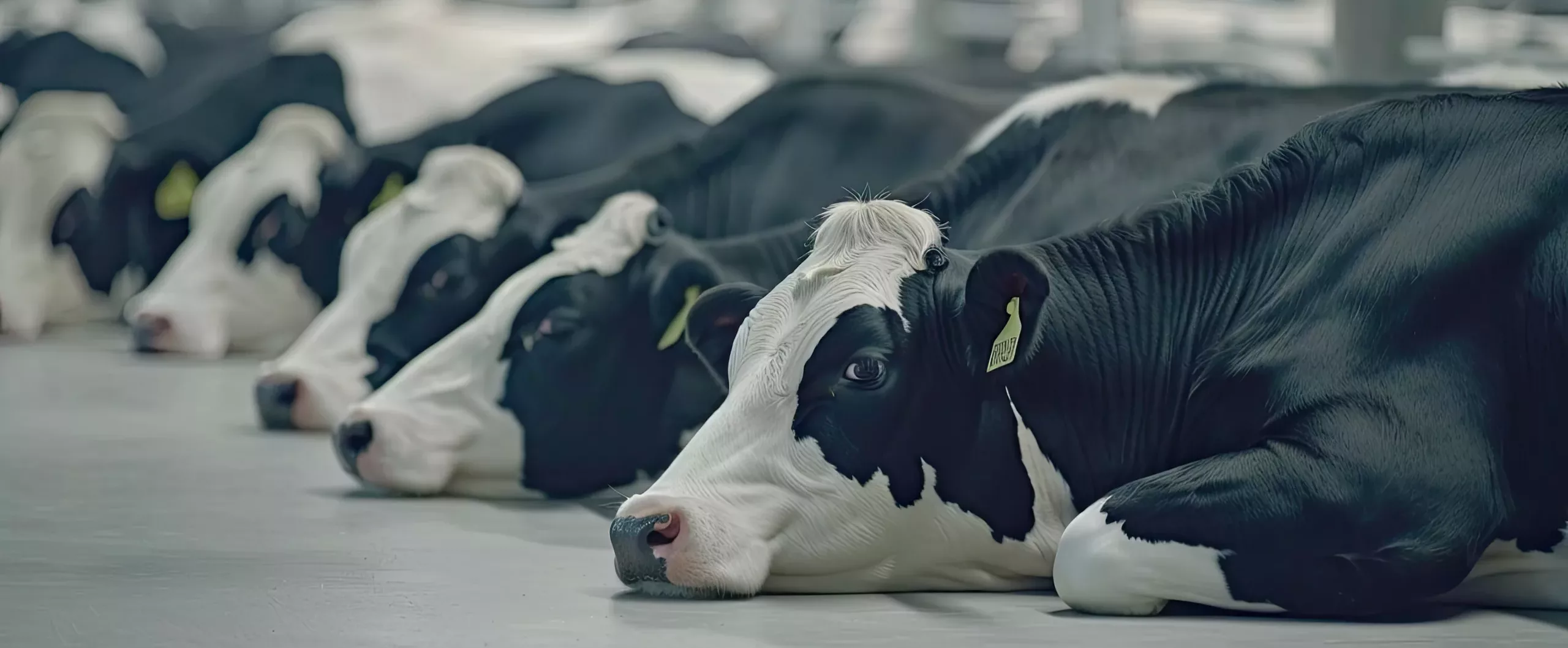
Understanding the Temperature-Humidity Index (THI): What Every Dairy Farmer Needs to Know


Many dairy farmers associate heat stress with hot summer afternoons. However, cows can begin experiencing heat stress long before temperatures seem extreme to people.
That’s why dairy specialists around the world use the Temperature-Humidity Index (THI) — a simple but powerful tool that combines temperature and humidity into a single value that helps predict when cows are likely to experience heat stress.
Understanding THI allows dairy farmers to take preventive action before milk production, fertility, and animal welfare begin to suffer.
What Is the Temperature-Humidity Index (THI)?
The Temperature-Humidity Index (THI) is a measurement that combines:
- Air temperature
- Relative humidity
Together, these factors determine how effectively a cow can cool herself.
Humidity plays a critical role because cows rely heavily on evaporative cooling through respiration. When humidity levels are high, this natural cooling process becomes less effective, making warm conditions feel much hotter to the animal.
For example:
| Air Temperature | Relative Humidity | THI Impact |
|---|---|---|
| 25°C | 40% | Moderate risk |
| 25°C | 80% | Significant heat stress risk |
| 30°C | 60% | Severe heat stress risk |
This is why cloudy, humid days can sometimes create more stress than hotter but drier conditions.
Why Dairy Cows Are Sensitive to Heat
Modern dairy cows are highly productive animals.
A high-yielding cow generates substantial metabolic heat simply through digestion and milk production. In many cases, her comfort zone is much cooler than most people expect.
Typical comfort ranges
- Ideal temperature range: 5°C to 20°C
- Mild heat stress can begin around a THI of 68
- Significant production losses often occur above a THI of 72
- Severe stress can occur when THI exceeds 78
High-producing cows are typically affected earlier than lower-producing animals because they generate more internal body heat.
THI Categories for Dairy Cattle
The following chart provides a general guide for interpreting THI values:
| THI Value | Stress Level | Expected Impact |
|---|---|---|
| Below 68 | No Stress | Normal performance |
| 68–71 | Mild Stress | Early behavioral changes |
| 72–78 | Moderate Stress | Reduced feed intake and milk production |
| 79–88 | Severe Stress | Significant production and fertility losses |
| Above 88 | Emergency Conditions | Serious health and welfare concerns |
While exact thresholds may vary slightly depending on breed, production level, and acclimatization, these ranges are widely used within the dairy industry.
What Happens When THI Gets Too High?
As THI rises, cows begin using energy to cool themselves rather than producing milk.
Common responses include:
Increased respiration
Cows breathe faster to release body heat.
Reduced feed intake
Animals consume less feed to reduce metabolic heat production.
Lower milk yield
Reduced feed intake and increased maintenance requirements result in lower production.
Poorer fertility
Heat stress negatively affects conception rates, embryo survival, and overall reproductive performance.
More standing time
Cows spend less time lying down and more time standing to increase heat dissipation.
The economic impact can be substantial, especially when elevated THI levels persist for several days or weeks.
Why Nighttime THI Matters
Many farmers focus on daytime temperatures, but nighttime conditions are equally important.
Cows need cooler temperatures during the night to recover from daytime heat exposure.
When nighttime THI remains elevated:
- Body temperature remains high
- Feed intake recovery is limited
- Milk production losses accumulate
- Long-term stress increases
This is becoming increasingly common across Germany and Austria as summer nights become warmer.
For this reason, effective ventilation should operate continuously—not only during the hottest hours of the day.
How to Monitor THI in Your Barn
Outdoor weather reports provide useful information, but barn conditions often differ significantly from outdoor conditions.
Factors affecting barn THI include:
- Airflow quality
- Stocking density
- Solar radiation
- Building design
- Ventilation effectiveness
Farmers can monitor THI using:
- Digital temperature and humidity sensors
- Barn management software
- Automated environmental monitoring systems
- Simple handheld measurement devices
The most valuable measurements are taken directly in the cow zone, where animals spend their time.
The Hidden Problem: Uneven THI Inside the Barn
Many dairy barns contain areas where airflow is insufficient.
These “dead zones” can experience:
- Higher temperatures
- Higher humidity
- Greater concentrations of heat-producing animals
As a result, cows in different parts of the same barn may experience very different levels of heat stress.
This explains why farmers often observe cows crowding near fans, doors, or naturally ventilated openings.
The goal is not simply to move air—it is to deliver consistent airflow throughout the entire barn.
How Modern Ventilation Helps Control THI
While ventilation systems cannot change outdoor weather conditions, they play a critical role in helping cows manage heat stress.
Effective air distribution helps:
- Remove accumulated heat
- Reduce humidity buildup
- Increase air speed around animals
- Improve evaporative cooling
- Maintain more consistent conditions throughout the barn
Modern fabric duct ventilation systems are designed to distribute airflow uniformly across the entire cow area, eliminating hot spots and ensuring that every animal benefits from improved air movement.
Unlike conventional fan arrangements that often create areas of strong airflow alongside stagnant zones, fabric duct systems provide controlled and predictable air distribution where cows need it most.
Download: Dairy Cow THI Reference Chart
Keep this simple guide available during summer months:
| THI | Action Required |
|---|---|
| Below 68 | Normal operation |
| 68–71 | Increase monitoring |
| 72–78 | Activate heat stress mitigation measures |
| 79–88 | Maximum cooling strategies recommended |
| Above 88 | Emergency response required |
Monitoring THI daily can help farmers act before production losses become visible.
Final Thoughts
Heat stress is no longer an occasional summer challenge. Across Central Europe, longer heat waves, warmer nights, and increasing humidity are making proactive heat stress management essential for modern dairy farming.
The Temperature-Humidity Index provides a simple way to understand when cows are at risk and when intervention is needed.
When combined with effective barn ventilation and air distribution, THI monitoring becomes one of the most valuable tools for protecting milk production, fertility, and animal welfare throughout the summer season.
Next Step
Read our next article: “How Fabric Duct Systems Provide Uniform Cooling in Cow Barns” to learn how modern air distribution technology helps maintain consistent comfort for every cow in the herd.
Frequently Asked Questions
The Temperature-Humidity Index (THI) is a measurement that combines air temperature and relative humidity into a single value. Dairy farmers use THI to assess the risk of heat stress in cows and determine when environmental conditions may begin affecting animal health and productivity.
THI helps farmers identify heat stress before visible symptoms appear. Monitoring THI allows dairy producers to take preventive action to protect feed intake, milk production, fertility, and overall cow welfare.
High humidity reduces a cow’s ability to cool herself through respiration and evaporation. Even moderate temperatures can create heat stress when humidity levels are elevated, making humidity a critical factor in dairy barn management.
Heat-stressed cows typically reduce feed intake and use more energy to regulate body temperature. As a result, milk yield and milk components such as fat and protein may decline.
THI values above 79 are generally considered severe heat stress conditions. When THI exceeds 88, cows may face serious health and welfare risks that require immediate intervention.
Ventilation does not directly change outdoor temperature or humidity, but it helps cows manage heat stress by increasing air movement, improving evaporative cooling, removing excess moisture, and reducing heat buildup within the barn.
A combination of proactive management and effective ventilation is typically the most successful approach. Uniform airflow throughout the barn helps cows dissipate heat more effectively and maintain comfort even during periods of elevated THI.