


Air that keeps cows eating
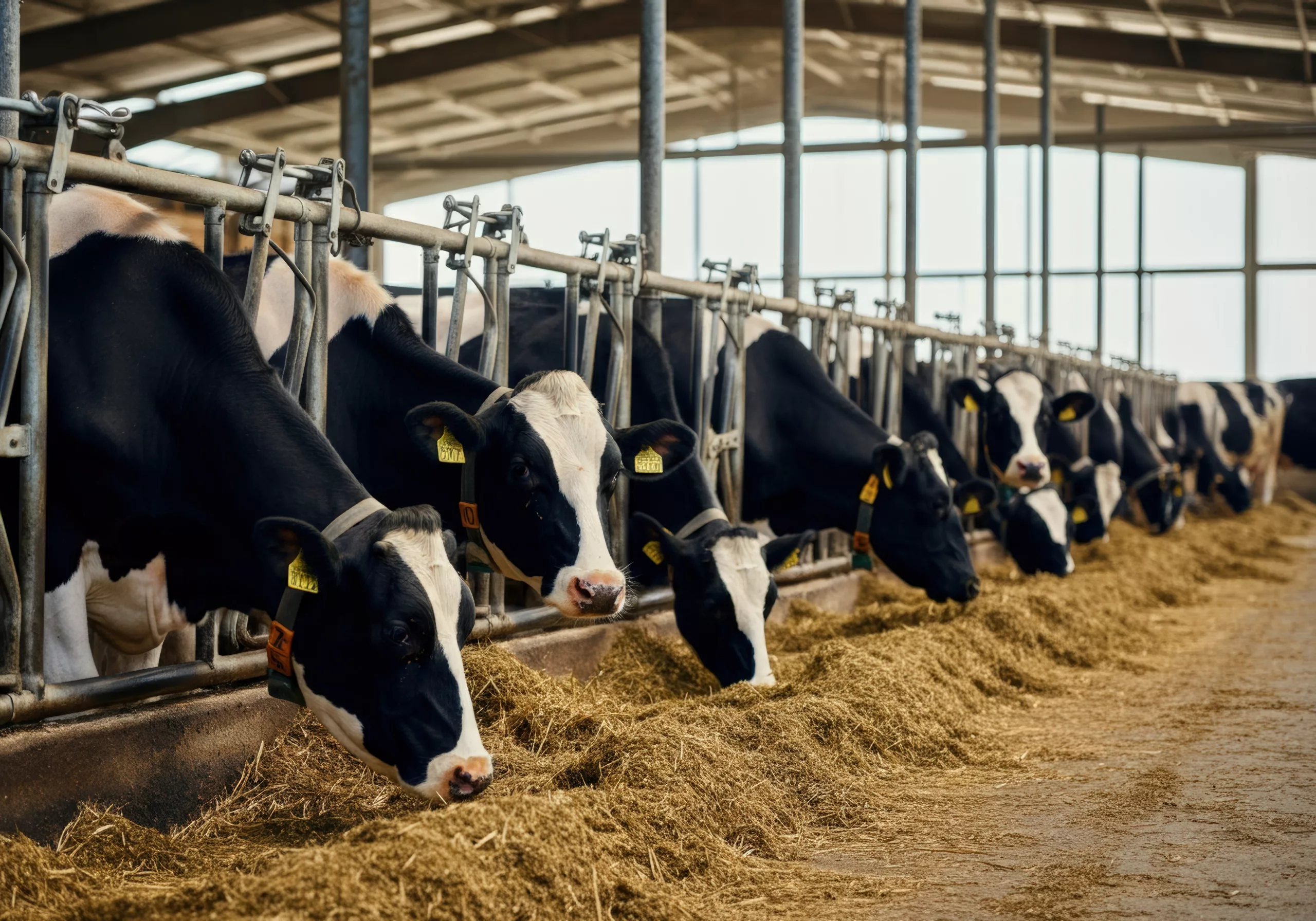
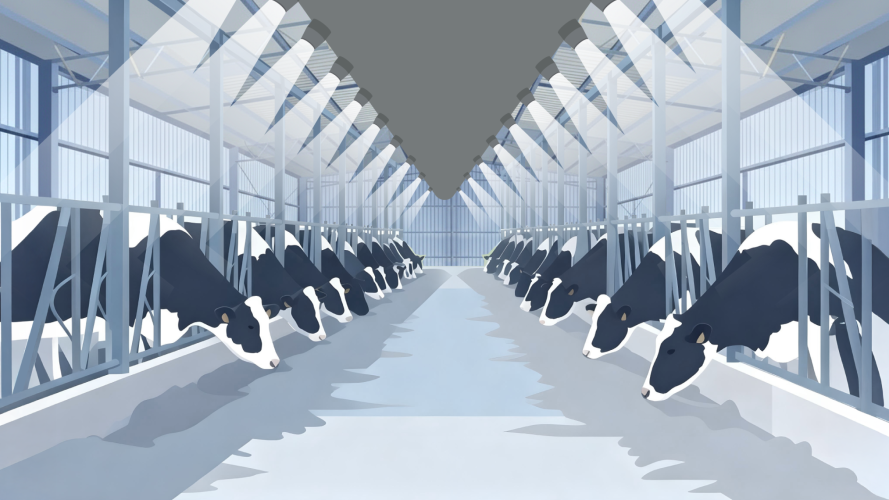
When cows are hot, they eat less and every drop in feed intake means lost milk yield. The feeding area is one of the most critical zones in the barn, and without proper ventilation it quickly becomes hot, humid, and dusty. ClimaBarn delivers fresh, evenly distributed air along the length of the feeding area.
The air is targeted at cows’ back with optimum air velocity depending on the season and individual barn specifics. This ensures comfortable cooling conditions for each cow and eliminates the rank fights. As a result, cows are less stressed and consume the feed regularly which leads to higher milk production and better overall health of the animal.
Advantages
Cow Comfort & Productivity
- Cooler feed alleys to boost dry matter intake in warm seasons
- Encourages consistent eating patterns, reducing production dips
Health & Hygiene
- Dust & ammonia reduction to avoid respiratory issues
Smart Engineering
- Targeted air delivery, designed for the exact layout of your feeding space
FAQ
Heat stress can cause cows to reduce feed intake, which impacts milk output. ClimaBarn ventilation system ensures fresh, cooler air moves along the feed bunk, keeping cows comfortable and encouraging steady feeding.
As a rule of thumb, every 1 kg drop in dry matter intake can reduce milk yield by up to 2 liters. By keeping cows cool and comfortable at the feed bunk, ClimaBarn helps prevent intake drops during heat stress supporting steady milk production.
Yes. When airflow is consistent along the entire trough, every cow has access to cooler, fresher conditions. This reduces competition for “priority spots” and helps maintain calmer, more consistent feeding patterns.
Unlike point-source fans, fabric ducts run the length of the feed lane, delivering consistent air directly to every cow. This avoids “priority spots” where only some cows benefit from cooling.
The feeding area requires strong airflow targeted at cows’ back to stay comfortable and maintain steady feed intake. Heat stress at the feed bunk often leads to reduced eating, which directly impacts milk production.
• Air speed at cow level: 1.0 – 2.5 m/s depending on season and feeding area floor type.
• Air hygiene: Consistent airflow helps reduce dust and ammonia build-up near feed bunks, protecting cows’ respiratory health and preventing spoilage of feed.
• Even coverage: Unlike spot fans, fabric ducts deliver a uniform breeze along the entire length of the feed bunk, so every cow benefits-not just the dominant ones at “preferred” spots.
In hot, stagnant conditions, cows reduce their feed intake, which directly lowers milk yield. Poor airflow can also allow heat and moisture to build up around the feed bunk, making cows less willing to eat and increasing the risk of digestive problems.
Yes. Fabric ducts are lightweight and flexible, making them easy to install in both modern free-stall barns and older facilities. They can run directly above feed bunks to ensure every cow has access to fresh air.

